بروزرسانی: 25 آذر 1404
Why SEO Does Not Work for You & Your Website
So, you’re wondering why SEO does not work for you and your website, right?
Haven’t you heard?! SEO is dead!
Dead from all the bad jokes about it.
Of course, SEO isn’t actually dead, but there are a few reasons why SEO might not be working for you and your site.
\xa0
We’ve gathered 14 top of mind reasons why your SEO might not be working for your website.
Let’s go through them and see if something rings a bell.
\xa0
- You don’t stick to the basics
- You don’t really understand what SEO is
- SEO just doesn’t fit your business/idea
- Your expectations are too high
- You’re not patient enough
- Your budget is too small
- You’re not focusing on mobile
- You don’t analyze and you underestimate your competition
- You’ve skipped keyword research
- You’re not prioritizing the right things
- You’re ignoring structure, click depth & internal linking
- You’re ignoring backlinks
- You don’t understand your audience
- You’ve externalized to the wrong SEO agency
- You’re not monitoring your results
\xa0
\xa0
1. You don’t stick to the basics
\xa0
When people say SEO has some relation with magic, what they actually mean is that it’s very complex.
\xa0
It would take several very long articles for me to fully explain how it works.\xa0
Yes, it implies user experience, link profile, content strategy, referral traffic or marketing campaigns. And all these SEO efforts might seem very complex.
\xa0
However, SEO is more simple that you might think, in some ways.
\xa0
In a nutshell, it’s the multitude of criteria which makes a website the best result for a particular keyword, in the sense that it satisfies the user’s intent.
\xa0
What you must understand is that Google isn’t trying to rank websites based on some checklist.
\xa0
Sure, it follows a list of criteria, but it also looks at historical data in the SERP and since Rank\xa0 Brain has got involved, machine learning really made things a lot more complicated.
It’s hard for us humans to keep pace with how Google decides what actually makes a web page ‘the best one’. At this point… I’m not sure even the makers themselves have any idea how things work anymore.
\xa0
So, instead focusing on the latest trends and techniques, try to focus more on the basics. Do them well and do them consistently.
\xa0
Sure, SEO and digital marketing experts like Neil Patel and Brian Dean always try new techniques and tweaks, but one thing’s for sure: They haven’t stopped posting!
\xa0
Being consistent is difficult, but it’s also the key to success!
\xa0
2. You don’t really understand what SEO is
\xa0
So, we know Google is trying to rank the best page.
\xa0
But what does that actually mean?
\xa0
Does it mean the page with the most targeted keywords? The page with the best links? The page with the best content?
Who wins the Google top organic results?
\xa0
It’s the page that best satisfies the user’s intent. And in some cases, the website alone can’t do it!
\xa0
Let’s say you want to rank high in the search engines for a very competitive eCommerce keyword. Well… if your offer isn’t good enough, you probably won’t.
\xa0
If you want to rank for “shoes” but you only have 3 products in your store, you won’t be getting far.
\xa0
If you want to rank for “cheap” but your prices aren’t cheap, again, you probably won’t have much success with it even if you optimize your website in this direction.
\xa0
Moreover, many people don’t understand that high rankings within search results also reflect the quality of a business, at least to some extent.
\xa0
For example, bad reviews on Google My Business can affect your local SEO rankings and your business listing and people don’t leave bad reviews because your SEO campaign sucks.
\xa0
Sure, you can invest in search marketing and pump links into a website and get it to the top, but if the business itself doesn’t have the necessary infrastructure to properly satisfy clients (quality, shipping, support), the results won’t last for long!
\xa0
I’ve seen sites pumping bad links and rushing to the top, only to fall ungracefully a short time after because they did not meet their user’s expectations.
\xa0
3. SEO just doesn’t fit your business/idea
\xa0
Another thing you should consider is that your business type should match SEO.
\xa0
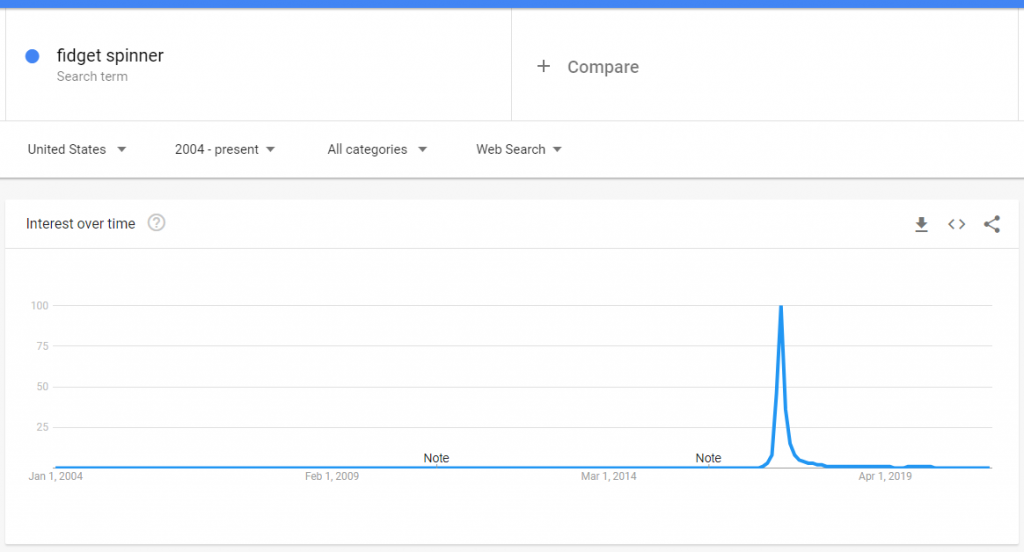
Usually, if you want to promote a short-term trending product, such as the fidget spinner, investing big and long term on SEO might not be the right choice!
\xa0
\xa0
Furthermore, if you need a quick turnover and you’re just getting started… SEO might not be the right channel for you, and you should look for PPC advertising or social media remarketing instead.
\xa0
However, it’s not always a matter of SEO vs PPC. Usually, they go well together.
\xa0
4. Your expectations are too high
\xa0
The higher the expectations, the bigger the disappointment.
\xa0
To be satisfied with your results, you’ll need to have realistic goals.
\xa0
With SEO, you can’t really expect top rankings and huge websites traffic in a month or two, if your domain has just been registered.
\xa0
You can’t expect to outrank the online presence of a strong competitor with thousands of links, with a tight budget and no scaling even if you apply some good SEO\xa0tactics.
\xa0
In some cases, the entire competition might be way out of your league. That’s when you have to dig in deeper, to find those keyword opportunities that are easier to rank for.
\xa0
You should still start with SEO as soon as possible, but start small. Look for keywords with lower competition and build your way up before saying that SEO does not work for you.\xa0
\xa0
5. You’re not patient enough
\xa0
Sometimes you just need to be more patient.
\xa0
Most SEOs will tell you upfront that it can take from 6 to 12 months to see the top positions.
\xa0

\xa0
Some will claim that they can get you to the #1 spot in the first month. It’s probably false and you should stay away from them.
\xa0
You should always see progress in the first month.
\xa0
If it’s a new website, that might be as little as the first pages getting indexed.
\xa0
So, if you’re not yet in the position you’ve wished for but have increased in rankings compared to the previous month, just give it a little more time. You’re on the right path.
\xa0
If you want to find out more about why it takes so long to rank in Google and other search engines and what you can do to speed things up, check out this article.
\xa0
6. Your budget is too small
\xa0
Actually… you CAN have high expectations. But for the right budget.
\xa0
If your budget is too small, you might not be able to do everything you want and you might end up saying that SEO does not work for you.\xa0
\xa0
SEO includes things like: good server, fixing technical SEO issues, keyword research, content marketing, social media, investing in links and many others.
\xa0
If you want to scale it up quickly and efficiently, the truth is that you will need a substantial investment.
\xa0

\xa0
Clients often ask me: “Why is it that SEO takes so long?”
\xa0
Sure, part of the answer is: “Because Google.”
\xa0
However, I’m always confident I can speed things up by scaling.
\xa0
But why does scaling speed up the process, you may ask?
\xa0
Well… it’s pretty straight forward:
\xa0
- More content = more keywords covered faster
- More links = faster higher authority
- More monitoring = better / faster tweaking
- More programmers = faster site, more useful features, better UX, etc.
\xa0
But all those above = more money.
\xa0
Are you developing the content for 5 categories per month? Pump that to 10. Are you consolidating the site’s structure with 2 monthly blog posts? Up it to blog posts. Are you securing 1-2 links per month? Make that 5 and so on.
\xa0
Many people get into SEO because they can use time instead of money to drive traffic to their websites and businesses.
\xa0
However, time can’t scale things up. Only money can. If you want to rank faster, you’ll need to outsource some work.
\xa0
7. You’re not focusing on Mobile
\xa0
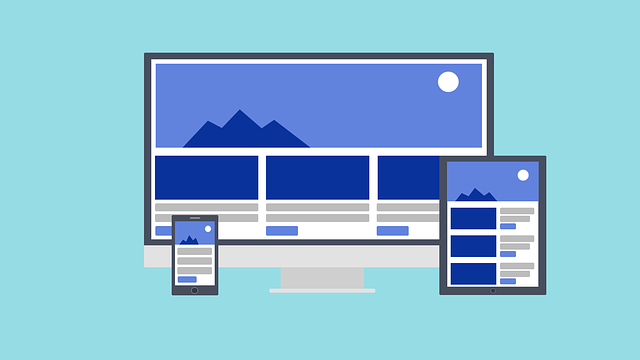
I know, I know, you’ve been hearing that Mobile SEO is very important and that most traffic is now coming from mobile devices.
\xa0
The real thing here is that most professionals work from a desktop computer. So, the first contact with any issue, be it web development or SEO related, is on desktop, most of the times.
\xa0
Often times I find myself fixing a quick issue on the desktop and completely forgetting to check how it looks on mobile devices.
\xa0
\xa0
And although I browse websites on mobile (as a user), when a client asks me something or signals an issue, I immediately check it on my computer (the phone is busy at my ear anyway).
\xa0
In SEO, you always have to keep in mind that Google uses mobile first indexing.
\xa0
If you’re mostly working from a desktop computer, like me, remember to always right-click in Chrome and hit inspect.
\xa0
You can select multiple device types to stop any issues.
\xa0
But sometimes, phones act differently than the desktop Chrome browser does (even when set on mobile view), so it’s always best to check on a physical phone itself.
\xa0
And don’t forget to check on both Android and iOS.
\xa0
Test if links work, test if scrolling works, test the entire checkout process, test, test, test.
\xa0
Ask your friends to test, ask your mom to test ask your cat to test. If the cat can use it, you’re good to go.
\xa0

\xa0
In addition to that, consider that CSS hidden content also follows the mobile-first mentality.
\xa0
Feel comfortable to combine desktop columns into sliders, or compress long paragraphs of text into dropdowns.
\xa0
For example, on an eCommerce website, you might have a small description before your products, on the category page.
\xa0
If on mobile devices the text pushes the products too far down, the users won’t be able to quickly see them when they load the page.
\xa0
You can shorten the mobile description by using a ‘read more’ link which triggers a dropdown with the rest of the content.
\xa0
8. You don’t analyze and you underestimate your competition
\xa0
“If you know the enemy and know yourself, you need not fear the result of a hundred battles. If you know yourself but not the enemy, for every victory gained you will also suffer a defeat. If you know neither the enemy nor yourself, you will succumb in every battle.” – Sun Tzu
\xa0
Deep, isn’t it?
\xa0
Google Analytics and Search Console are very good friends, but they only show you data for your own website.
\xa0
Sometimes, it’s not enough to only do research about yourself. You have to analyze your competition! Not doing this, might end up in saying that SEO does not work for your website.\xa0
\xa0
That’s why having an SEO Tools Set like CognitiveSEO is a good idea. You can analyze and monitor your competitors to see how they perform and find gaps.
\xa0
So, if you want to improve your SEO campaigns, make sure you always perform an SEO Competitor Analysis.
\xa0
9. You’ve skipped keyword research
\xa0
New clients often come to me because they are not satisfied with the results they got from their previous SEO partners.
\xa0
Many times, after a quick analysis, I can spot that the title tags and meta descriptions have not been optimized at all!
\xa0
That lets me know that keyword research hasn’t been performed.
\xa0
I’ve seen many ‘SEO pack’ offers around, which are mostly PBNs or different link building tactics. 5 links per month…\xa0 10 links per month… and so on.
\xa0
It baffles me and I don’t agree with it, but I guess it’s about money…
\xa0
They’re easy to sell and can often offer quick results. But those results might only last a very short time and I can bet on who the contract you’ve signed covers (spoiler alert, it’s not you).
\xa0
However, while those links might be helpful in certain situations, they probably won’t get you anywhere without the right keyword in the right places.
\xa0
Make sure you do your keyword research!
\xa0
10. You’re not prioritizing the right things
\xa0
It might not be that you’re doing SEO wrong. It might just be that you’re doing the wrong type of SEO or at the wrong time.
\xa0
Why put so much effort into getting that 100% PageSpeed score if your loading times are already between 1-3 seconds?
\xa0
Why write more blog content when you haven’t finished optimizing your category pages?
\xa0
- If you have a small website and no SEO has been performed, start with keyword research and title tags optimization.
- If you have a website with a lot of images, start by compressing your images.
- If you have a huge website with a lot of filters, make sure you prioritize crawlability and indexability by optimizing your faceted navigation.
\xa0
Sometimes, it might be design (if your website is too outdated for your audience). Other times, it might be UX.
\xa0
It’s different from website to website.
\xa0
That’s why an\xa0SEO audit is crucial for your website’s success, especially if your website is huge.
\xa0
But not just any SEO audit will do. You need an SEO Audit that actually looks in-depth at all your issues and then prioritizes them properly.
\xa0
11. You’re ignoring structure, click depth & internal linking
\xa0
A website’s structure defines how easily users and search engines will navigate and understand your content.
\xa0
Make sure you structure your website accordingly.
\xa0
You should always keep important pages maximum 3 clicks away from your homepage.
\xa0
If you’re using pagination, make sure all your pages are linked to from the first archive/category page.
\xa0
Moreover, if you’re not doubling down already on internal links, you should.
\xa0
Use your blog to always link to important pages, such as product category pages, using relevant and keyword rich anchor texts.
\xa0
There’s no penalty for using too many internal links. Well… just don’t make everything an internal link and you’ll be fine.
\xa0
12. You’re ignoring backlinks
\xa0
I’ve been fortunate enough to be able to help most of my clients rank high with very few links if any links at all.
\xa0
But once in a while, there are projects that even the best SEOs can’t handle without actively pursuing backlinks.
\xa0
I like to think of myself as being able to do everything without links, but I also what to be as efficient as possible.
\xa0
Getting backlinks is not bad. They’re just used improperly.
\xa0
In some cases, your website simply needs more authority. And the fastest way to build it is by having quality backlinks.
\xa0
If the number of links your competitors have far outweighs yours, you’ll have a hard time outranking them.
\xa0

\xa0
Sometimes, it might just mean it takes longer to see results, considering you’re doing everything else right.
\xa0
Other times, it’s just plain impossible.
\xa0
Links can help you kickstart that initial progress to help you gain your client’s trust and secure a long-term deal.
\xa0
The best thing you can do is to build relationships, through content marketing and shareable content, such as case studies or interviews with industry-leading experts.
\xa0
Don’t just stop at link building. Try to be involved and build a small community. That’s what Google likes.
\xa0
Sometimes, however… you can just buy the links.
\xa0
Of course, you don’t want to buy and spammy links that might get your website penalized.
\xa0
But it’s wise to understand that links are ads and ads are paid for. The internet works based on ads, so own it.
\xa0
You can always nofollow your paid links (just like Google tells you to do).
\xa0
Nofollow links can also improve rankings and I’ve seen this with my own eyes on my own clients.
\xa0
13. You don’t understand your audience
\xa0
The audience is much more important for SEO than you think. It can make or break your SEO strategies. You might be saying: neh, SEO is not working for me when the actual problem is the way you tackle your audience.\xa0
\xa0
You might have the best interest and the greatest information in your content marketing strategy. But if you don’t deliver it in the right format or tone of voice, you won’t be getting the best results.
\xa0
Maybe your audience prefers video content. Then stop spending so much time writing articles. Just use your video scripts as repurposed content on your blog instead.
\xa0

\xa0
Make sure you understand your audience well and make decisions based on that.
\xa0
14. You’ve externalized to the wrong SEO agency
\xa0
I hate talking about this, but finding a good SEO company or digital marketing agency isn’t an easy task.
\xa0
Even more… in the pandemic era of 2020-2021, people have rebranded as experts in digital marketing fields. Much to say… they’re not really experts.
\xa0
So, be very picky when choosing who you work with. Here are some more things to look after when hiring an SEO company.
\xa0
On the other hand, if you are an SEO company, here’s how to convince your clients to buy your SEO services.
\xa0
15. You’re not monitoring your results
\xa0
Correctly monitoring results is a very difficult task. Sometimes, is not that SEO does not work but monitoring results properly does not work.\xa0
\xa0
That’s because monitoring isn’t just about traffic and conversion rate optimization.
\xa0
It’s about discovering new opportunities to do things better.
\xa0
But even so, whether it’s a drop in traffic or a drop in conversions, the sooner you see it, the sooner you’ll be able to fix it.
\xa0

\xa0
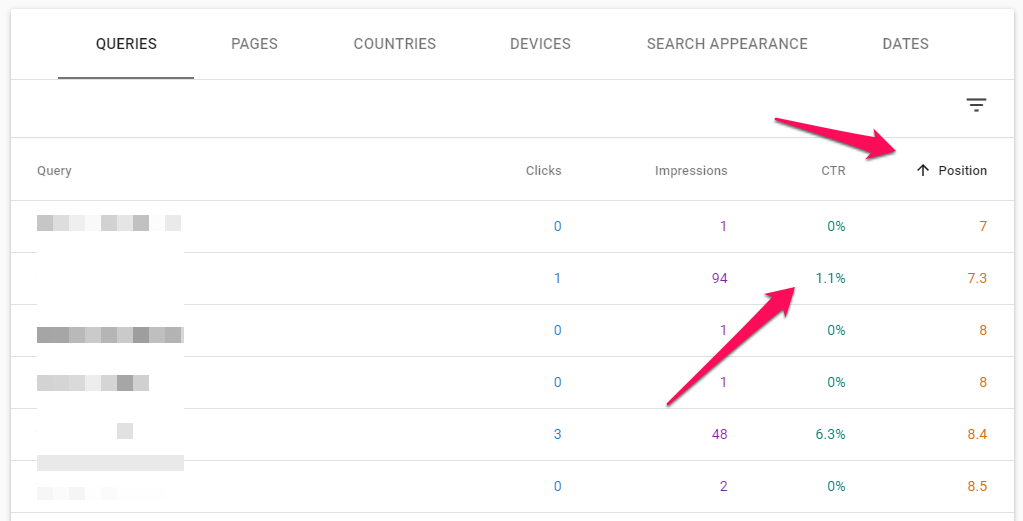
There are many tricks, such as using Google Search Console to identify secondary keywords for articles that are already ranking pretty well.
\xa0
Go to the Performance Section, select a page that’s already ranking well and then go back to the Queries section. Activate Positions and CTR and look for those phrases that have a good click through rate.\xa0
\xa0
\xa0
You can then start adding that keyword to your content to rank better for it in the search engines. If you want even better results, try out the CognitiveSEO Content Optimization Tool.
\xa0
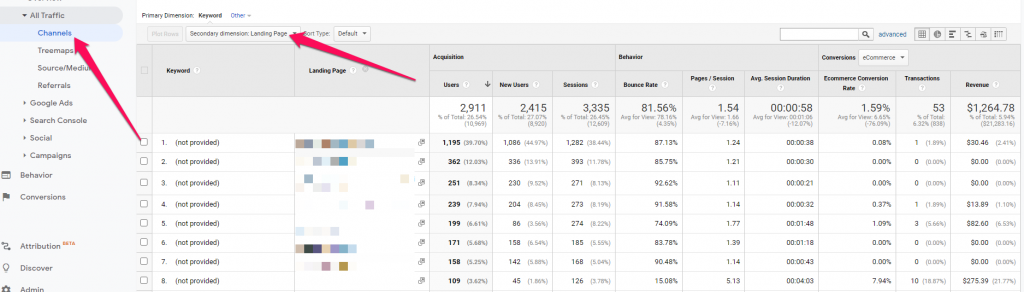
Or, you can use a Secondary Dimension (Behaviour > Landing Page) on the Organic Traffic Channel in Google Analytics to figure out which pages converted the best. Then you can mix those with the Google Search Console query data to know (with approximation) which set of keywords bring the most conversions.
\xa0
\xa0
Tools such as Google Analytics have a lot of filters that can help you figure out what exactly happened on your website so make sure you use them for better SEO results.
\xa0
I hope this list of 15 reasons why your SEO doesn’t work helps you figure out what you’ve been doing wrong or at least gives you a new perspective on your SEO campaigns.
\xa0
Complex SEO strategies and tactics are awesome, but you always have to make sure you stick to the basics first.
\xa0
Do you think there are other reasons why someone’s SEO strategy might not work? Share them with us in the comments section below.
\xa0

منبع: https://cognitiveseo.com/blog/24732/seo-does-not-work/